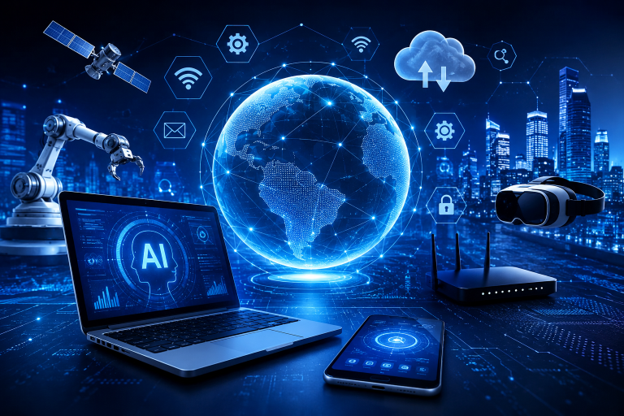
Honestly, technology’s just. there now. In everything. You’re texting your mom, finishing a report, googling something random at 2am — none of it feels like “using technology” anymore; it’s just life. Give it a few years, and it’s changed how we talk to people, how we work, how we study, even how we kill time on a boring evening.
Remember when getting anything done took forever? Standing in line, waiting for a callback, whatever. Now it’s a few taps, and it’s handled — food’s ordered, message is sent, meeting’s joined. Things move faster, and somehow everyone’s more reachable too.
And it’s not only phones and laptops, but that’s also the thing people forget. Medical devices, smart home stuff, all these little systems quietly running in the background — that’s technology too. It’s kind of everywhere if you actually stop and look.
Table of Contents
Communication
This is probably the biggest shift, if you think about it. People used to write letters. Or make calls that cost a fortune per minute just to hear someone’s voice from another country. Now? Seconds. That’s it.
Texting apps, email, video calls — talking to someone far away barely takes effort anymore. Companies run meetings over video, schools do too. Technology and Communication
Families catch up the same way. Social media’s part of this obviously — good for staying in touch, but easy to overdo, and privacy’s worth keeping an eye on.
Education
Kids today basically have a library in their pocket. Digital books, online courses, whole universities’ worth of material a search away.
Online classes help a ton too — if you live far from school in Education Technology
or your schedule’s a mess, you’re not stuck. Teachers use videos and interactive stuff to make dry topics less painful.
One catch though — not everything online is true, so figuring out what’s a real source versus nonsense is basically a required skill now, not extra credit.
The Workplace
Work looks completely different than it used to. Cloud storage, Technology in the Workplace
Shared docs, video calls instead of conference rooms — most companies run on this stuff daily.
Teams spread across different cities, sometimes different countries, still manage to work like they’re in the same room. That’s basically why remote work took off — all you need is a laptop and halfway decent internet.
Businesses also use all that customer data to figure out what people actually want, instead of guessing.
Healthcare
Doctors catch things earlier now, treat them better too, thanks to better equipment. Records being digital just makes everything easier to track.
Telehealth’s been a real help for people who can’t easily get to a clinic — a call instead of a trip. And smartwatches, fitness trackers, they’re quietly making people pay more attention to sleep, steps, all that. Doesn’t replace an actual doctor, though-, worth remembering.
Smart Homes
Lights, cameras, thermostats, voice assistants — control your whole house from your phone now, or just talk to it. Kind of wild when you think about it.
Saves energy too; stuff turns off automatically when it’s not needed. But don’t just plug it in and forget it — update the devices, use a real password, or you’re basically leaving a door open.
Entertainment
Movies, music, games, books — screens, basically all of it now. No more waiting around for a show to air, streaming just… has it, whenever.
Gaming’s gotten way more social too, playing with people across the world like they’re next door. Fun, sure, but easy to lose track of time — less moving around, less actual hanging out, if you’re not careful.
The Good Stuff
Convenience is the big one — stuff that used to eat your whole afternoon now takes ten minutes. Information’s basically unlimited if you’ve got internet.
Task apps, calendars, shared docs — keep people organized without much effort. And whole jobs exist now that just didn’t before — cybersecurity, content creation, digital marketing, that whole world.
The Not-So-Good Stuff
It’s not all upside, though. Privacy’s a genuine concern — people put so much of themselves online, and it’s only as safe as whatever password’s protecting it. Sketchy links, weak passwords — that’s how people get burned.
Constant phone checking chips away at actually talking to people face to face, and misinformation spreads faster than anyone can correct it half the time. Worth double-checking before hitting share.
Using It Right
Strong passwords, two-factor login, backups — boring stuff, but it works. Check your privacy settings once in a while; don’t click random links from nowhere.
And just… put the phone down sometimes. Breaks, actual outside time, people in person. Not about quitting technology — just not letting it run the whole show.
What Comes Next
AI, robots, smarter gadgets — that’s the direction everything’s heading. AI’s already in customer service, schools, hospitals, business, pretty much everywhere already, honestly.
Exciting stuff ahead, but it needs to be handled with some care. Privacy, fairness, just basic human well-being — that stuff shouldn’t get lost as things move faster.
Wrapping Up
Technology’s changed almost everything about daily life at this point — how we talk, learn, work, get through the day. Comes with some responsibility too though — protect your privacy, stay a little alert, know when to put the thing down.
Used right, it should make life easier, not take it over. Get that balance, and it opens up a lot — time back, new skills, people you’d have lost touch with otherwise, doors that used to be shut.
Conclusion
Look, technology’s touched pretty much every corner of life at this point — how we talk to people, how we learn, how we work, even how we relax at the end of the day. It’s made staying in touch effortless, learning way more accessible, work more flexible, and the small daily stuff way less of a hassle than it used to be.
But it’s not free of trade-offs. Privacy needs watching, screen time needs limits, and staying alert to scams or misinformation is just part of the deal now. None of that’s a reason to avoid tech though — it’s just the price of using something powerful responsibly.
At the end of the day, tech works best as a tool, not something running your life for you. Keep that balance right, and it genuinely gives back — time, new skills, people you’d have otherwise drifted from, chances that used to be way harder to come by.
Read More: AI Agents Are Replacing Your To-Do List, Not Your Job
FAQs
1. Why does technology even matter this much in daily life?
Try leaving your phone at home for a day, honestly. Texting, work, checking the time, ordering food — all of it runs through some device now. It’s not really optional anymore; it’s just how things work.
2. How’s communication changed because of it?
Used to be letters, then expensive phone calls. Now it’s video calls to someone across the planet like they’re sitting right there. My cousin lives abroad, and I talk to her more now than when she lived two hours away.
3. What’s the actual benefit of all this tech?
Speed and access, mostly. Need info, you search it. Work from your couch if you want — booking stuff, learning stuff, paying bills — all quicker than before. Doesn’t sound huge, but it adds up over a week.
4. Does it actually help students?
No more lugging around textbooks, just PDFs and apps now. Tutorials for basically anything exist somewhere online. A research trip that used to mean the library is just a search bar now. And along the way they end up picking up computer skills without even trying.
5. What’s the downside of all this?
Not perfect, not even close, honestly. Privacy’s a real concern, hacking happens, people lose hours scrolling — me included some days — misinformation spreads way too fast, and face-to-face talk’s definitely taken a hit.
6. How do you actually stay safe with it?
Good passwords. Two-factor turned on. Keep things updated. Skip the weird links. Think before posting personal stuff. None of it’s hard; people just skip it anyway.
7. What’s changed at work because of it?
Remote work basically exists because of this. Teams spread across cities, files sitting in the cloud, meetings on a screen instead of a room, boring repetitive stuff running itself. Also opened up jobs that just didn’t exist ten years back.
8. Where’s technology headed next?
More AI, more automation, smarter devices — that direction seems locked in at this point. Communication will probably shift again too; hard to say exactly how from here.
9. How’s it showing up in healthcare?
Better equipment. Digital records replace paper charts. Telehealth lets you skip the waiting room. Wearables quietly track your health without you thinking about it.
10. How do you keep a healthy relationship with it?
Know when to put it down, basically. Take breaks, get outside, move around, use it for stuff that actually matters instead of scrolling out of boredom. Sounds simple. Isn’t always easy in practice.